
Rebecca Pearce, Psy.D.
I work with individuals navigating anxiety,
relationships, and the complexities
of caring for others.
Presence.
I work with individuals navigating anxiety,
relationships, and the complexities
of caring for others.
Presence.
Connection has always been a human challenge—long before the Beatles’ “Eleanor Rigby” captured the image of “wearing the face that she keeps in the jar by the door.” Even now, many of us move through our days with a kind of mask in place—sometimes without even realizing it.
We shape how we show up in the world—at work, in relationships, even within our own families. At the same time, there’s pressure to be “authentic,” as if that should come easily. It doesn’t. Most of us carry different parts of ourselves—some grounded and true, others shaped by expectation, anxiety, or the need to belong.
So we find ourselves wondering: What is really me? What am I still (still!) growing into?
And for those who are caring for others—partners, parents, children—the questions often shift: Where am I in all of this? What parts of me have been set aside?
How do we care deeply for others and still remain connected to ourselves? And is it okay that the answer changes from day to day?
These layers often serve a purpose—they help us protect ourselves, navigate relationships, and feel accepted. But over time, they can also leave us feeling disconnected, unsure, or alone in ways that are hard to name.
My work in counseling and therapy is to help people gently reconnect—starting with themselves. Whether you’re struggling with anxiety, feeling disconnected in your relationships, or simply wanting a stronger sense of self, this is a place to slow down and listen inward.
From there, something begins to shift. With greater self-understanding and self-compassion, it becomes easier to move through the world with more clarity, more steadiness, and a deeper sense of authenticity.
Whether you’re navigating a difficult season or feeling ready to reconnect with your own strength and direction, therapy can offer a meaningful place to begin.
I work in the arena of relationships. This includes the relationship you have with yourself—especially when it’s shaped by experiences such as:
depression
anxiety (worry or panic)
traumatic experiences
binge or overeating patterns, and body image concerns
It also includes relationships with others, particularly when they’ve been disrupted by loss—through:
death
divorce
estrangement
a break-up
relocation
church wounds or a shifting understanding of God
changes in identity that lead to a loss of community
And sometimes, disconnection happens more quietly. In the process of caring for someone else, you may begin to lose touch with yourself. This can happen when supporting someone through:
chronic illness
a life-threatening condition, such as cancer or an eating disorder
a terminal illness, including dementia
complex conditions such as addiction
In these situations, it can be difficult to know when necessary and appropriate caregiving begins to edge into codependency. And even when it doesn’t, the emotional and physical impact of caregiving can be significant. And even when it doesn’t, the physical & emotional impact of caregiving is well documented.
““Coming here enables me to work.
I come here and I un-scatter...””
When we meet, there is a natural rhythm between quiet reflection, listening, shared observations, and sometimes laughing at life’s ironies.
Together, we explore how you understand your lived experience—your day-to-day reality, how you think about it, how you feel it, and what you notice in your body. Over time, this builds a deeper awareness of yourself: your patterns, your choices, and your capacity to respond with greater clarity and resilience.
The work is grounded in gentleness and respect, with space for curiosity—and a good sense of humor along the way.
I primarily work with adult women, though I do work with a small number of men. Sessions are by appointment only, Monday through Friday.

““I am at such
a different place now
than I even thought would be possible....””

Teletherapy
connection in your own space
Like many clinicians, I began offering teletherapy in 2020 and have continued to see how effective it can be. I’ve been especially encouraged by the depth of work that’s possible—even with approaches like EMDR.
I currently offer both in-person and teletherapy sessions on designated days. Many clients appreciate the consistency of meeting in person, while others benefit from the convenience and accessibility of teletherapy.
Whether meeting in person or online, the focus remains the same: creating a space where you can feel comfortable, supported, and able to do meaningful work.
When it is time for our session, please sign into the website, below.

You do not need special equipment other than a smartphone/tablet with or without ear buds. If you’re concerned about privacy inside your home because of others who are also working from home, use your judgement about whether you can go to some green space or simply sit in your parked car. Be sure your device is fully charged.
If the site does not function for our appointment, we can use another portal. That waiting room button is below. Only use the one below after we’ve tried the primary waiting room and have agreed to switch over.
Text me if you are having problems. We’ll figure it out together!
Prepare for this the way you would a typical session - wear & bring the same things you would for an in-person visit. Be thoughtful about the auditory & visual privacy of your setting. The ideal would be a place in your residence that is peaceful (maybe not your bed because this could disrupt your sleep hygiene). Think about what will help you feel safe, comfortable, grounded, and nurtured. Examples of things you might want to gather are:
tissues
comfortable seating
tea or water, mints or gum
a comfortable space for your pet
blanket
stress ball
an image of someone or something that evokes calm or protection
I prefer a visual connection as it truly helps improve communication. When this is not possible, there are two things to consider. First, landlines, mobile phones, and Voice over Internet Protocols all have varying levels of privacy, so I cannot guarantee confidentiality through these technologies.
The other thing to consider is insurance reimbursement. Historically, insurance companies required a synchronous audiovisual connection to qualify as a telehealth service. Currently however, CMS is allowing audio-only psychotherapy, [Telehealth Policy Updates- HHS.gov] and generally other insurance companies follow similar guidelines.

I can provide teletherapy to individuals in states participating in PSYPACT
Telepsychology is not appropriate for all problems or people. Also, my preference at this time is to see teletherapy clients who live within a 2 - 3 hour drive from my office in Nashville, in case of emergency.
Psy.D., Rosemead School of Psychology, Biola University, La Mirada, CA
Psychologist, TN License # P0000002067
EMDR Level II
Board Certified Telehealth Professional Level I
Authority to Practice Interjurisdictional Telepsychology (APIT) Certification
Certificate in Foundational Competencies in Older Adult Mental Health Rush University Medical Center
My training includes family systems, Gestalt, cognitive-behavioral, and psychodynamic therapy, and I’ve continued to build on that foundation over time—integrating mindfulness, EMDR, and Acceptance and Commitment Therapy (ACT).
In practice, I’m less focused on applying a particular model and more interested in understanding how things fit together for you—your thoughts, your emotions, your relationships, and the ways your experiences have shaped you. From there, we begin to make sense of things together and find ways of responding that feel more steady, more intentional, and more like you.
2023 Historian, 2014 Co-Chair, 2000 Treasurer: Nashville Psychotherapy Institute (NPI)
Founding Member: Eating Disorder Coalition of Tennessee (now RenewED)
National Register of Health Service Psychologists (National Register)
Eye Movement Desensitization and Reprocessing International Association (EMDRIA)
For a complete listing of my previous academic and work experience, please check my LinkedIn account.

Raised in Southern California (where summer nights were punctuated by the sound of Disney fireworks), I moved to Tennessee for my pre-doctoral internship over two decades ago. In coming here, I discovered the difference between real BBQ and a cookout, the wonder of warm rain, the beauty of fall color, and the life-altering revelation of warm woolen socks.
Outside of the office, I enjoy traveling with my husband and photography (including the photos on this website). I also like to bake—partly for the creativity and generosity it allows, and partly for the inevitable, and often hilarious, mishaps.
At times, my sweet cat Maura used to make a quiet appearance during teletherapy sessions, often settling nearby or briefly on camera. She remained a steady presence until her little body gave out. I remain grateful for the depth of connection we shared—and for what loving her taught me about care, devotion, and the difficulty of letting go.
These days, a bright white cat named Fiona may occasionally show up—briefly and without concern for timing.
My pronouns are she/hers




… still learning!
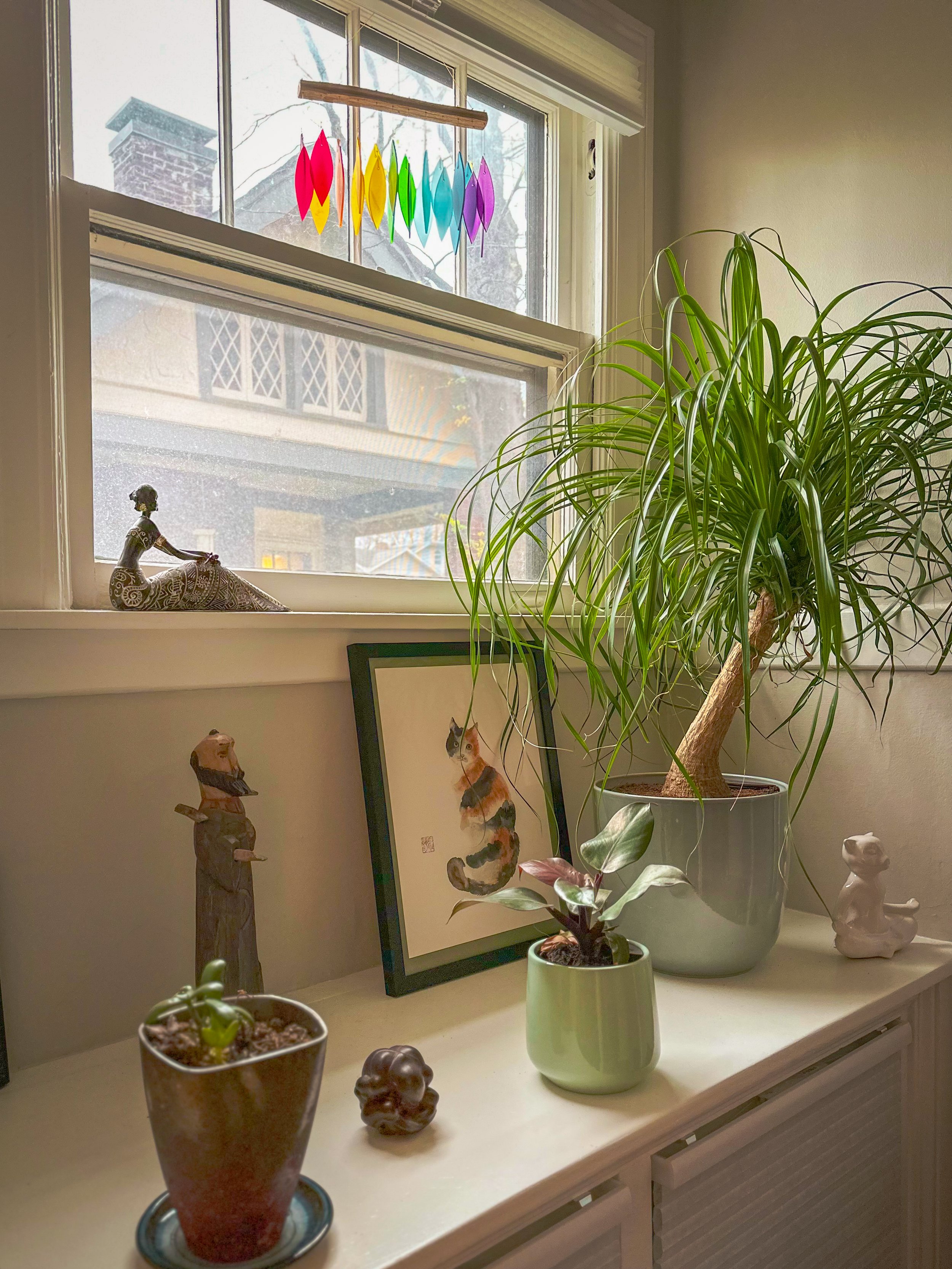
I am committed
to maintaining a welcoming,
respectful,
and safe environment.
As a psychologist, I know healing begins with feeling safe, seen, and genuinely respected. I’m committed to holding space with humility and care - especially for those from marginalized communities and for people of all identities, backgrounds, and beliefs, including those with no faith tradition. I actively learn about people who are different from me and seek to listen more deeply and show up with greater sensitivity.




I schedule people with a standing, regular time, because it’s good to have a predictable, reliable time. Typically people begin by coming in on a weekly basis for the first 3 - 4 sessions, and if it makes sense at that time we can drop to every other week. When I’ve been working with someone for quite some time we might move to once every four weeks.
My standard fee for a 55 minute session is $205, and a 45 minute session is $175.
After the initial assessment period of three sessions, if we continue to work together on a weekly basis there is a 10% discount ($184.5 for 55 min. session; $157.5 for a 45 min. session). If we do not continue at the weekly frequency, the price remains at the standard rate listed above.
I ask for 24 hours notice for cancellations. If there is a cancellation with less than 24 hours notice the fee is $100. A missed appointment is charged the full fee amount as if we had met, including any portion that might have been covered by insurance.
Requirements for animals to qualify as emotional support animals are becoming more rigorous, and therefore I do not write letters to certify emotional support animals.
Under the law, health care providers need to give patients who don’t have insurance or who are not using insurance an estimate of the bill for medical items and services. You have the right to receive a Good Faith Estimate for the total expected cost of any non-emergency items or services. This includes related costs like medical tests, prescription drugs, equipment, and hospital fees. You can also ask your health care provider, and any other provider you choose, for a Good Faith Estimate before you schedule an item or service. If you receive a bill that is at least $400 more than your Good Faith Estimate, you can dispute the bill. Make sure to save a copy of picture of your Good Faith Estimate. For questions or more information about your right to a Food Faith Estimate, visit www.cms.gov/nosurprises .

If you are interested in making an appointment, the most efficient process is to
You can also call and leave the information requested on the form in a voicemail. To protect your privacy I do not correspond via email. Instead, I ask you to leave your phone number so I can call you when I am in the office.
This form is not for cases of an emergency contact. If you’re in an immediate or life-threatening crisis, please call 988 or contact TN crisis hotline at 855-CRISIS-1. That’s 855-274-7471.
By law in Tennessee, everyone is a mandatory reporter. To report child abuse please call Child Protective Services at 877-237-0004. To report elder abuse please call Adult Protective Services at 1-888-APS-TENN or 1-888-277-8366

1410 17th Avenue South, Nashville, TN 37212
615.383.4300
NOTE: My office is in a historic building with exterior steps. If
stairs,
balance,
mobility,
vision,
fall risk
are a concern, please let me know before your appointment so we can discuss telehealth or the safest access plan.
In-person services may be available* on
Monday afternoons
Wednesday (all day)
Friday (all day)
*I will request that we pivot to a virtual appointment if either of us have symptoms of a cold, flu, sinus infection, covid, strep throat, etc. etc.
I offer teletherapy only, on
Monday mornings
Tuesday (all day)
Thursday afternoons

